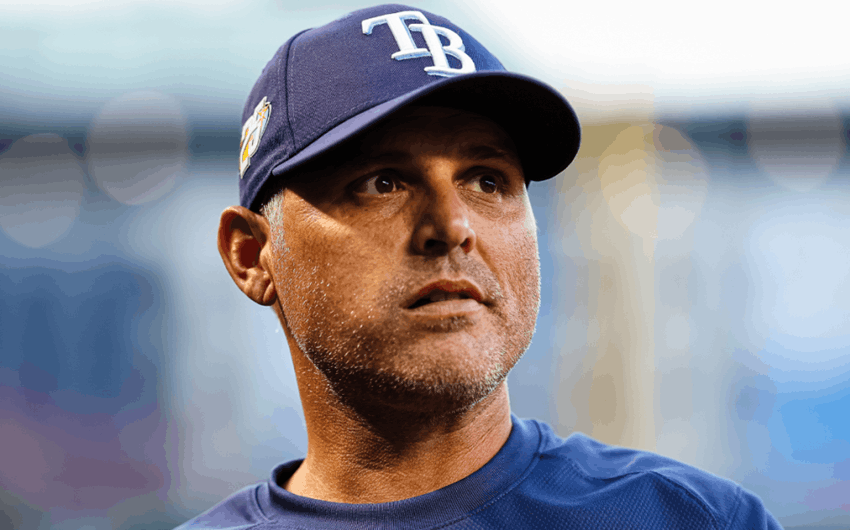
Kevin Cash Net Worth in 2026: Rays Manager Salary, Career, and Assets
Kevin Cash net worth draws interest because he’s led the Rays through years of winning seasons in a sport where managers rarely become household names. The simple answer is that his wealth is solid but not superstar-level, built from a decade-plus as an MLB manager plus earlier player earnings. The more interesting part is how a modern manager actually makes money, what costs come with the job, and why Cash’s long-term contract security matters as much as the headline number.
Quick Facts
- Full Name: Kevin Forrest Cash
- Estimated Net Worth (2026): About $7 million
- Estimated Range: Roughly $5 million to $10 million
- Birthdate: December 6, 1977
- Age (as of January 2026): 48
- Birthplace: Tampa, Florida
- Height: 6’0”
- Former MLB Position: Catcher
- Current Role: Manager, Tampa Bay Rays
- Notable Awards: American League Manager of the Year (2020, 2021)
- Spouse: Emily Cash
- Children: Three
Kevin Cash Bio
Kevin Cash is a former Major League catcher who made the tougher jump after retirement: moving from being a role player in the clubhouse to being the person responsible for every decision on the field. He’s known for a calm style, sharp preparation, and a willingness to lean into modern strategy when most managers were still hesitant. Since taking over the Rays, he’s built a reputation for getting the most out of small-market resources, blending analytics with feel, and keeping teams competitive even when the roster changes constantly.
Emily Cash Bio
Emily Cash is Kevin Cash’s wife, and she has largely stayed out of the spotlight compared to her husband’s public career. The family is known to live in the Tampa Bay area, and they’ve raised their three children with a fairly private approach, which is uncommon in today’s always-online sports world. While Kevin is on camera almost daily during baseball season, Emily’s role has been more behind the scenes, supporting the family’s stability through the grind of long seasons and constant travel.
Kevin Cash Net Worth in 2026
A practical estimate for Kevin Cash’s net worth in 2026 is around $7 million, with a reasonable range of $5 million to $10 million. That range makes sense for someone who has earned money in two strong lanes: MLB player salaries earlier in life and a long stretch as a major league manager afterward. The exact figure is not publicly confirmed because manager contracts, investments, and personal assets aren’t disclosed in a simple, transparent way. Still, the overall picture is clear: he has built a comfortable, multi-million-dollar financial base through steady high-level employment rather than flashy endorsement fame.
It also helps to remember what “net worth” really means. It’s not the same as annual salary. Net worth is the estimated value of what someone owns (cash, investments, property) minus what they owe (mortgage, taxes, liabilities). For most MLB managers, the wealth story is usually steady and long-term, not explosive and sudden.
How Kevin Cash Makes His Money
MLB manager salary as the main engine
For Kevin Cash today, the biggest income source is the Rays manager job. MLB manager pay varies widely across the league, with a handful of big-market managers earning top-tier money and many others earning more modest seven-figure salaries. Tampa Bay has historically operated as a disciplined, cost-aware franchise, but Cash’s long tenure and success typically put him above the “new manager” pay level.
Even without a publicly confirmed number, it’s reasonable to view his compensation as a strong annual salary that has grown over time through extensions and on-field results. The longer you last in an MLB dugout, the more valuable you become, because continuity is rare in a job that changes quickly when teams underperform.
Long-term contract security and extensions
Contract security is a quiet wealth-builder for a manager. The Rays have extended Cash multiple times, and that matters because it locks in income while also increasing negotiating strength. A multi-year extension doesn’t just mean “you’re employed.” It usually signals trust from ownership and the front office, which can translate into better terms, better stability, and sometimes performance-based incentives.
For net worth, that stability is huge. It allows a person to plan. A manager with multi-year security can buy property more confidently, invest more consistently, and avoid the panic decisions that sometimes happen when careers feel uncertain.
Former player earnings that created early wealth
Cash also earned MLB money as a player. He wasn’t a superstar earner, but he played in the majors for multiple seasons, and MLB minimum salaries and arbitration-era pay still create a meaningful financial base for players who manage money well. For many former role players, that early income becomes the foundation: pay off debts, buy a home, start investing, and then build the bigger wealth phase through the second career.
This is an important detail because it explains why his financial story isn’t only about managing. He didn’t start from zero when he became a coach. He already had years of professional baseball earnings and industry relationships behind him.
Bonuses, incentives, and postseason value
Managers can receive bonuses tied to milestones like postseason appearances, division titles, or awards, depending on contract structure. Even when incentives aren’t public, teams often reward stability and success in some form. Cash’s résumé includes major achievements, including award recognition and multiple competitive seasons, which typically strengthens the total compensation picture over time.
Postseason runs can also create indirect financial benefits. Winning seasons boost a manager’s profile, which can lead to higher future contracts, paid speaking opportunities, and broader professional demand.
Career Milestones That Boosted His Earning Power
Becoming “the long-term answer” in Tampa Bay
One of the biggest financial milestones for any manager is simply lasting. MLB is a results business, and managers are often the first to get blamed when a team struggles. Cash becoming a long-tenured manager in Tampa Bay signals that he’s not just surviving year to year. He’s viewed as a central part of the Rays’ identity and approach.
That kind of institutional trust is valuable. It’s the difference between being replaceable and being core. When you’re core, you have leverage. And leverage is what raises earnings in professional sports.
Two Manager of the Year awards
Winning Manager of the Year doesn’t automatically come with a giant paycheck from the league, but it increases a manager’s market value. Awards are proof. They become part of the résumé forever, and they change how teams view your leadership. In contract negotiations, awards help because they create a clear argument for why you deserve top-tier compensation.
For Cash, those awards also strengthened his brand as a modern manager who can win with creativity and roster flexibility, which is a major selling point in today’s game.
Reputation for innovation and adaptability
Cash became closely associated with strategy that challenged old habits. Whether you love those choices or not, they placed him at the center of a modern baseball conversation. That matters because reputation can become currency. A manager known for being ahead of the curve is less likely to be dismissed as “replaceable,” and more likely to be viewed as someone who brings a system, not just a lineup card.
System-building leaders generally earn more over time because teams pay for stability and process, not only for a single season’s win total.
Assets That Likely Make Up Most of His Net Worth
Real estate in Florida
For many long-tenured MLB managers, the largest visible asset is often a primary residence. With Cash’s Tampa Bay roots and long-term role in the area, it’s reasonable to assume real estate plays a role in his overall wealth. A home is both lifestyle and financial strategy, especially when purchased during earlier career stages and held over time.
Real estate also fits the lifestyle of a manager: you want a stable home base for family while your schedule swings wildly from February through October, and sometimes beyond.
Investments and long-term saving
Most modern MLB personnel with strong incomes use long-term investing to build wealth: retirement accounts, diversified market investments, and financial planning designed to smooth out career uncertainty. A manager’s income can be high, but the job is never guaranteed forever. That reality encourages many people in the sport to invest conservatively and consistently.
For a net worth estimate, this category is a big reason the number can grow steadily even if salary stays roughly the same. Compounding does the work quietly, year after year.
Cash reserves and financial buffers
High-level sports careers come with volatility. Even successful managers can be fired after one disappointing season if ownership changes direction. Because of that, many coaches and managers keep large cash buffers. This isn’t glamorous, but it’s smart. It protects the family, reduces stress, and allows better decisions when contract talks come up.
What Can Reduce a Manager’s “Kept Money”
It’s easy to look at a seven-figure salary and assume wealth grows instantly. In real life, a lot comes out first:
- Taxes: High-income earners in the U.S. lose a significant portion to federal taxes, plus state taxes where applicable.
- Agent and professional fees: Managers often work with agents, lawyers, and financial planners.
- Travel and lifestyle costs: Baseball life involves constant travel, training costs, and a schedule that can increase spending.
- Family costs: Raising three kids while maintaining stability during the season is expensive, even for disciplined households.
These realities are why a manager can earn strong income for years and still have a net worth that looks “smaller than expected” compared to superstar players.
Why Kevin Cash’s Wealth Profile Looks Different Than MLB Players
Cash’s financial story is more like a successful executive than a celebrity athlete. Players can earn massive contracts in a short window, especially if they become stars. Managers usually build wealth in a steadier climb: consistent salary, long tenure, and gradual accumulation of assets.
That style can be less flashy, but it can be more stable. A manager with job security and smart financial planning can build lasting wealth without needing a single giant payday. Cash fits that profile: durable employment, steady raises through extensions, and a reputation that supports long-term career value.
A Realistic Takeaway
Kevin Cash net worth in 2026 is best understood as the result of long-term consistency. A grounded estimate is around $7 million, supported by years of MLB managing income, earlier player earnings, and likely investments and property that have grown over time. He isn’t in the “superstar contract” category, but he is firmly in the “very successful professional” category—someone who turned a playing career into a long, high-level leadership job and built real wealth the steady way.
image source: https://www.cbssports.com/mlb/news/rays-sign-kevin-cash-mlbs-longest-tenured-manager-to-contract-extension-team-president-extended-as-well/